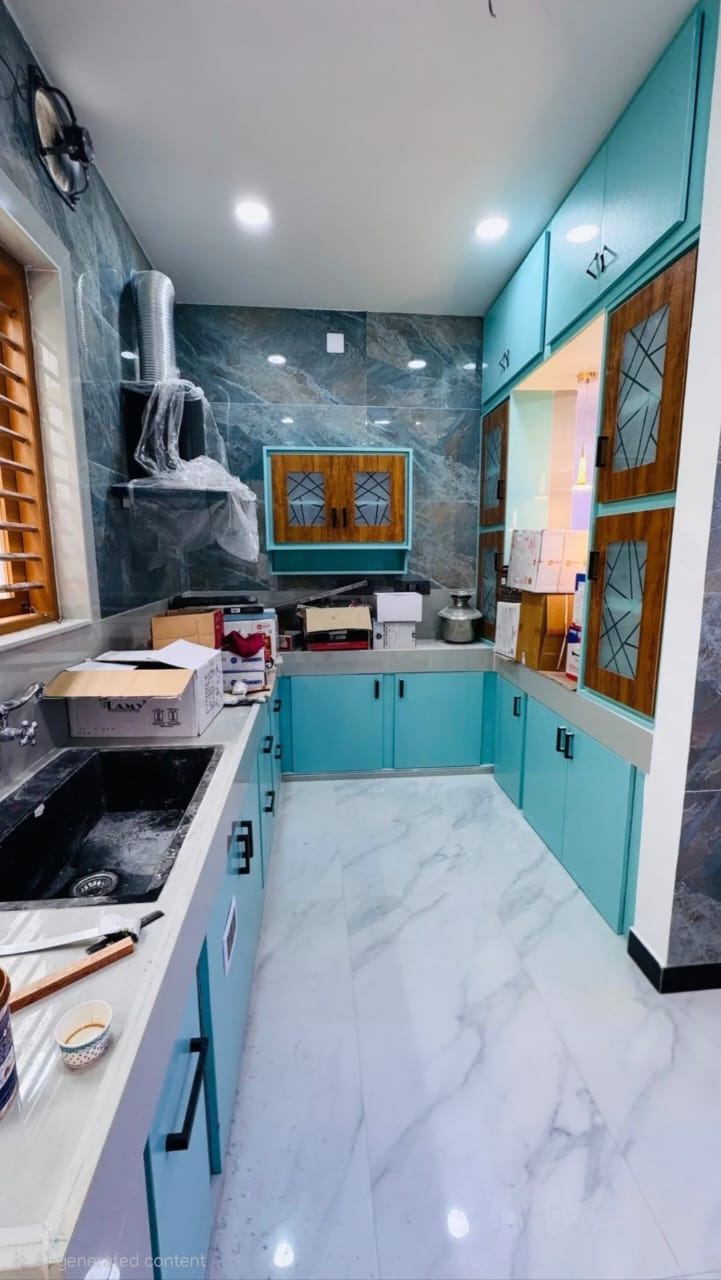
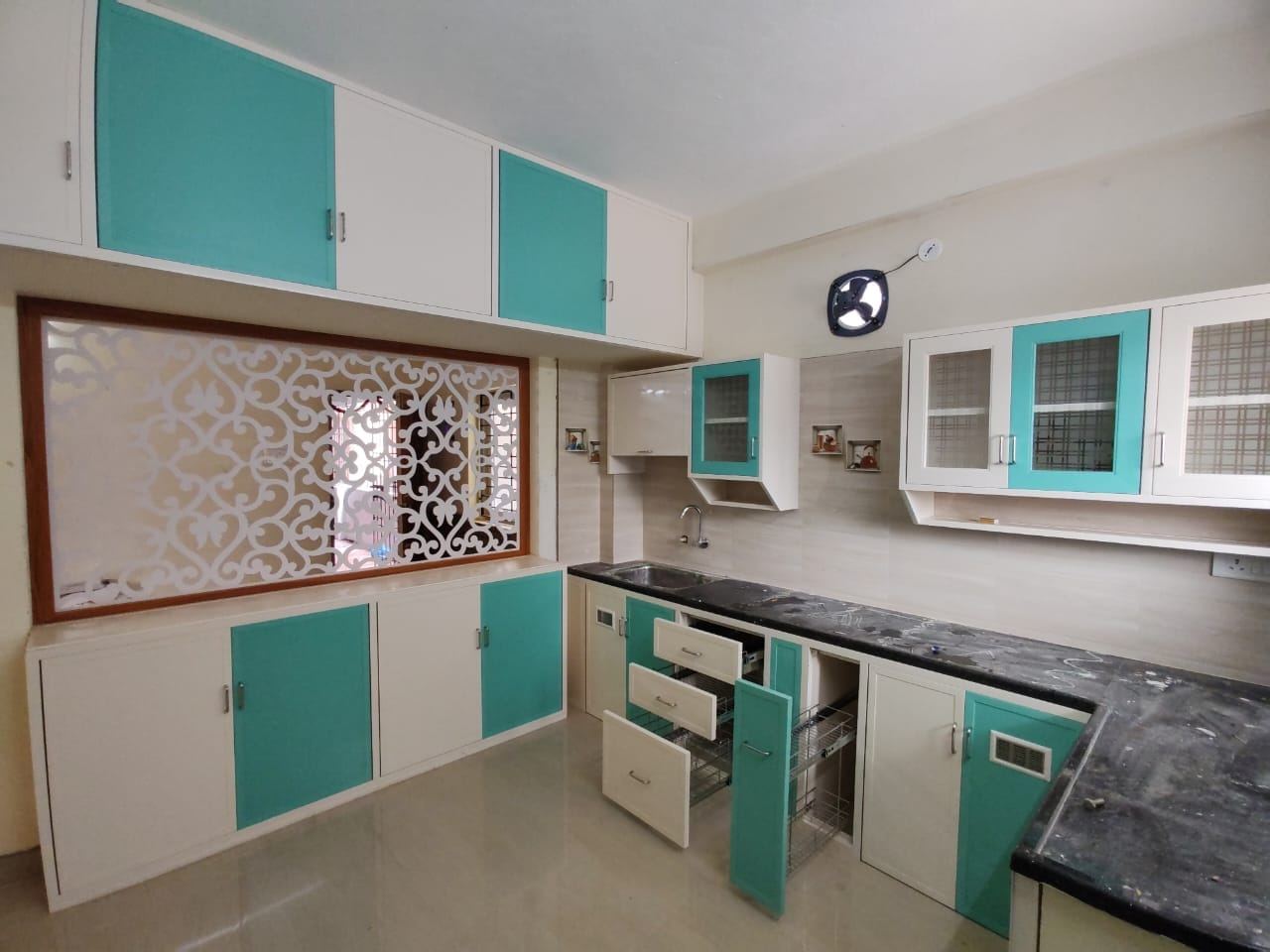
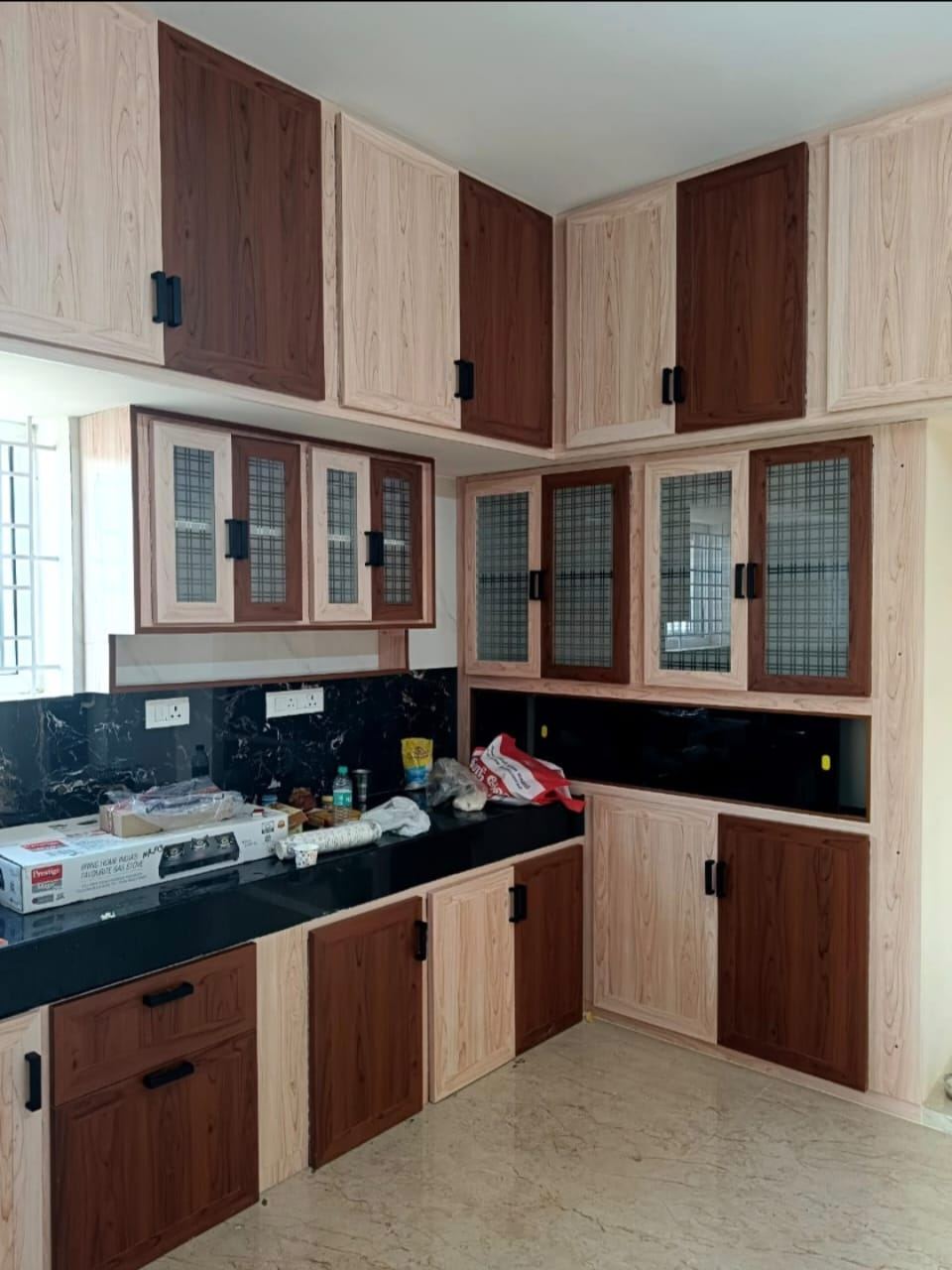
Termite damage in home interiors is rarely visible until a shelf gives way — understanding why PVC/uPVC avoids the problem entirely helps when comparing quotes.
Key points
- Termites feed on cellulose, the structural fibre found in wood, plywood, MDF and particleboard.
- PVC/uPVC and WPC boards are synthetic polymers with no cellulose content, so there's nothing for termites to feed on.
- This means PVC/uPVC interiors need no periodic anti-termite chemical treatment, unlike wood-based furniture.
- Termite-proofing is a structural property of the material itself, not a surface coating that can wear off.
- For ground-floor homes or termite-prone localities, this is often the single biggest reason to switch to PVC/uPVC.
Why this matters when you're planning modular kitchen
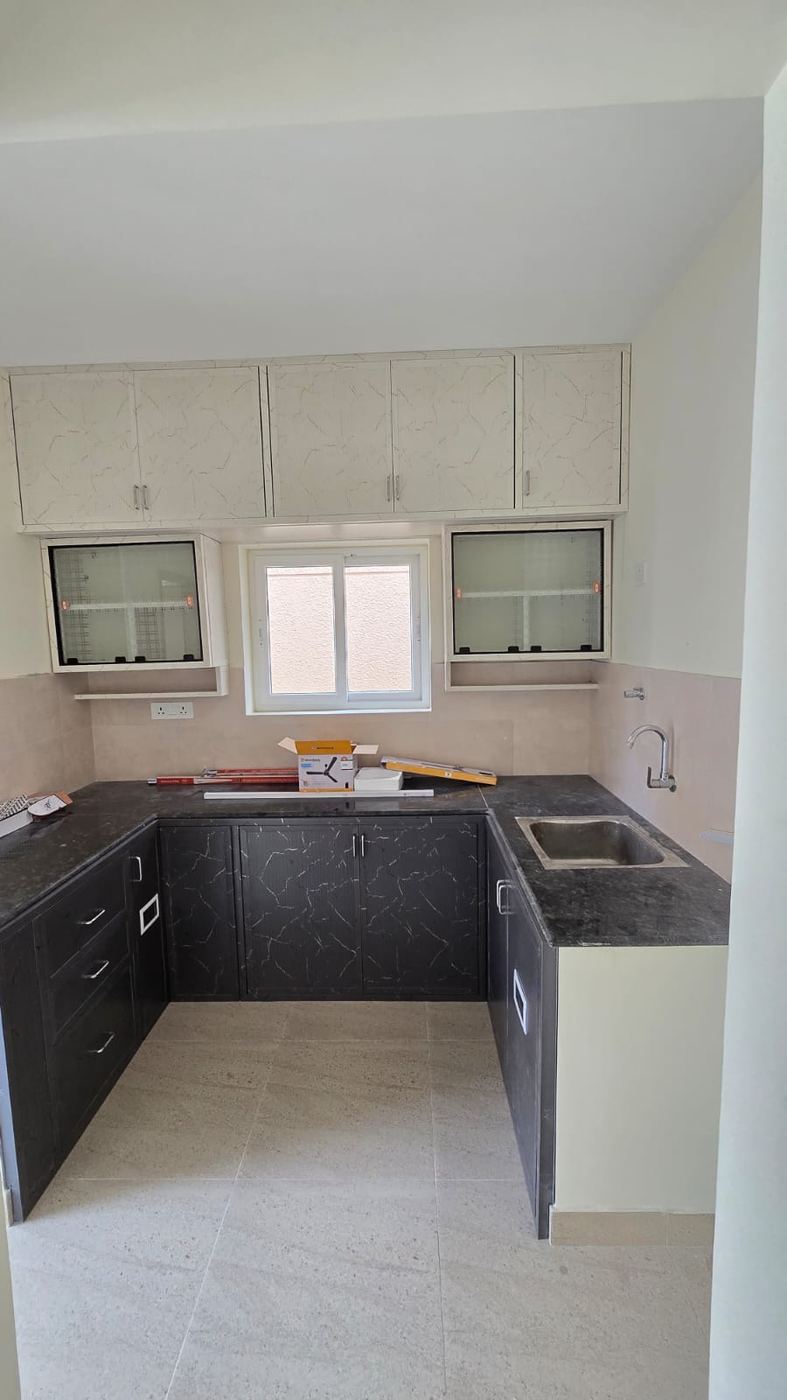
At No More Wood, every modular kitchen we design starts from this same material logic — plywood kitchen shutters swell at the sink, laminate peels off at the hinge line, and termites quietly hollow out the carcass behind your cabinets — usually discovered only when a shelf collapses. We build the modular kitchen to avoid that from day one, not patch it later.
Need this done right, not just explained?
Talk to our modular kitchen designers — free site visit, no obligation.
PVC/uPVC Materials & Technology
No More Wood
Chennai