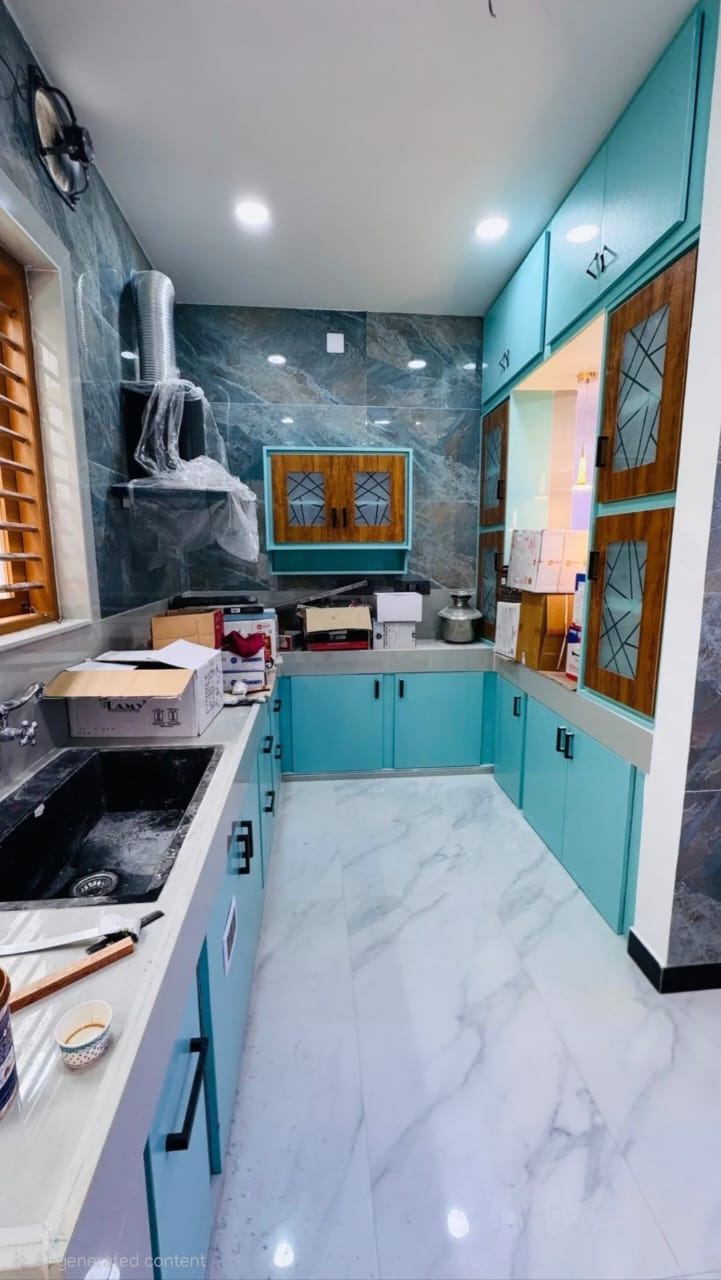
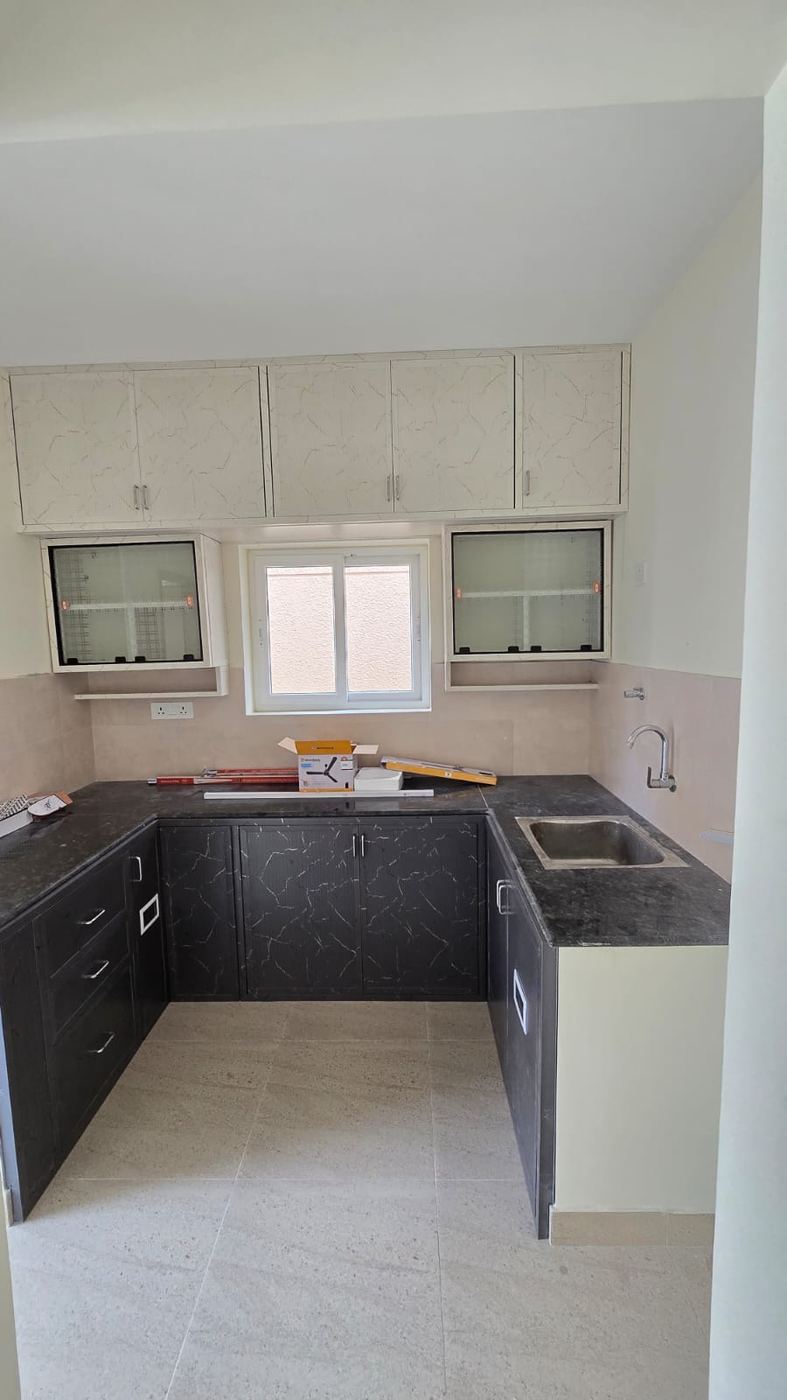
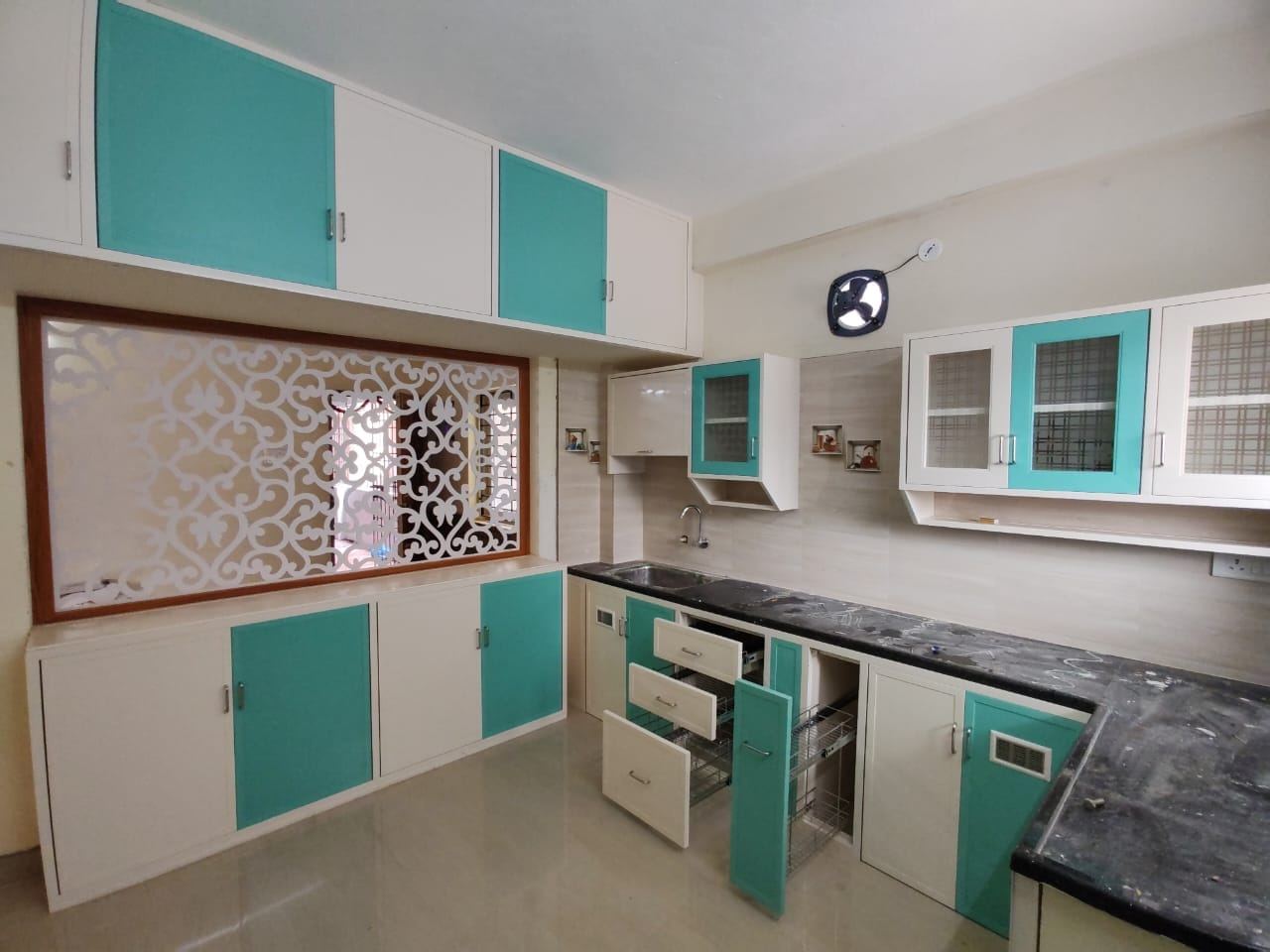
MDF (medium-density fibreboard) is a common budget option in interiors, but it behaves very differently from PVC/uPVC in humid conditions.
Key points
- MDF is made from compressed wood fibres and resin, making it dense and smooth but highly absorbent if edges are exposed to moisture.
- Once MDF swells from water exposure, the damage is generally irreversible — the board doesn't return to its original shape.
- PVC/uPVC boards are closed-cell and don't absorb moisture, so they perform consistently in bathrooms, kitchens and coastal humidity.
- MDF is lighter to work with for certain detailed mouldings, which is why it's still used in dry, low-moisture areas.
- For any area with regular water exposure — kitchens, utility rooms, bathroom cabinets — PVC/uPVC is the more durable long-term choice.
Why this matters when you're planning modular kitchen
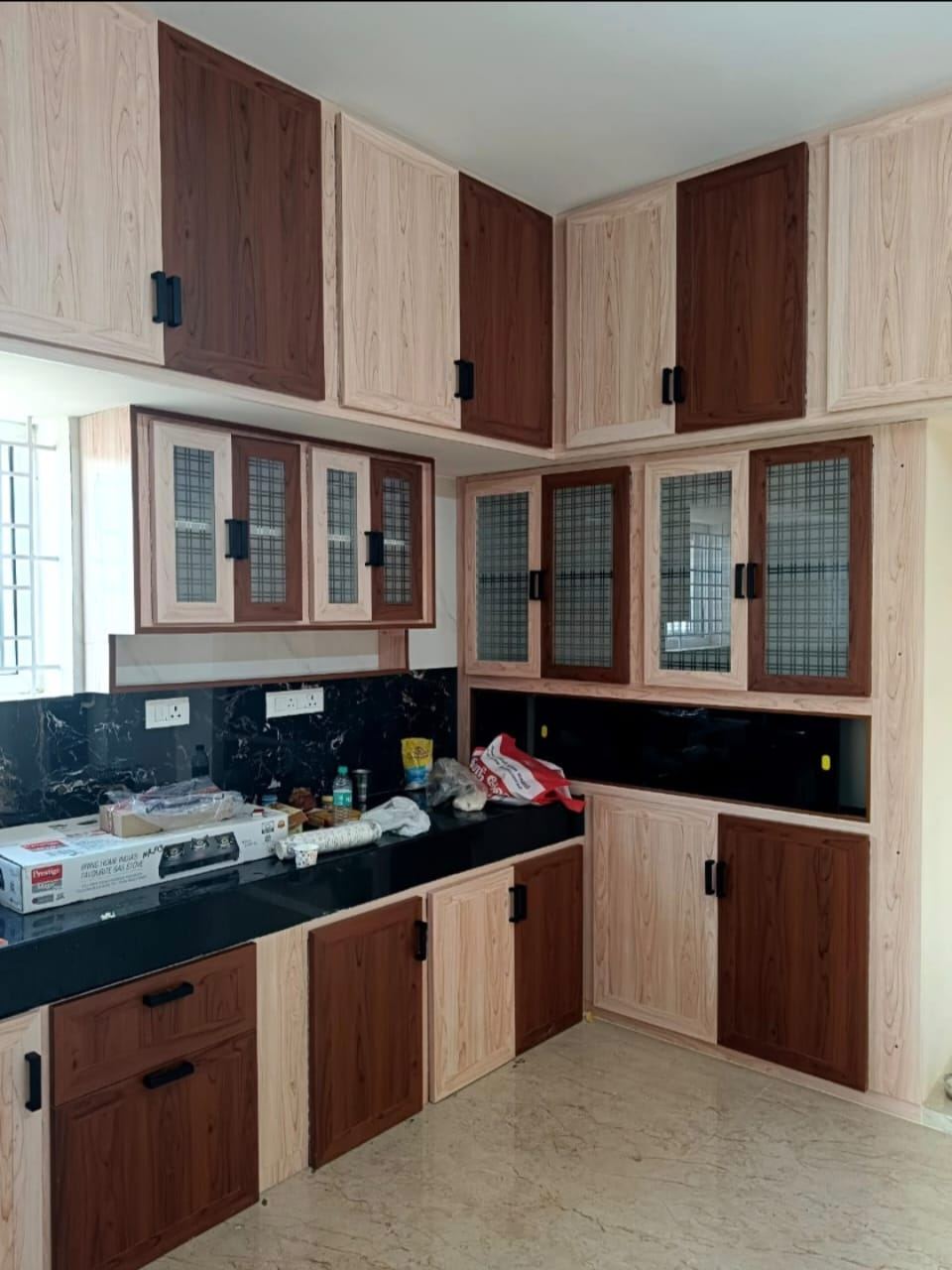
At No More Wood, every modular kitchen we design starts from this same material logic — plywood kitchen shutters swell at the sink, laminate peels off at the hinge line, and termites quietly hollow out the carcass behind your cabinets — usually discovered only when a shelf collapses. We build the modular kitchen to avoid that from day one, not patch it later.
Need this done right, not just explained?
Talk to our modular kitchen designers — free site visit, no obligation.
PVC/uPVC Materials & Technology
No More Wood
Chennai