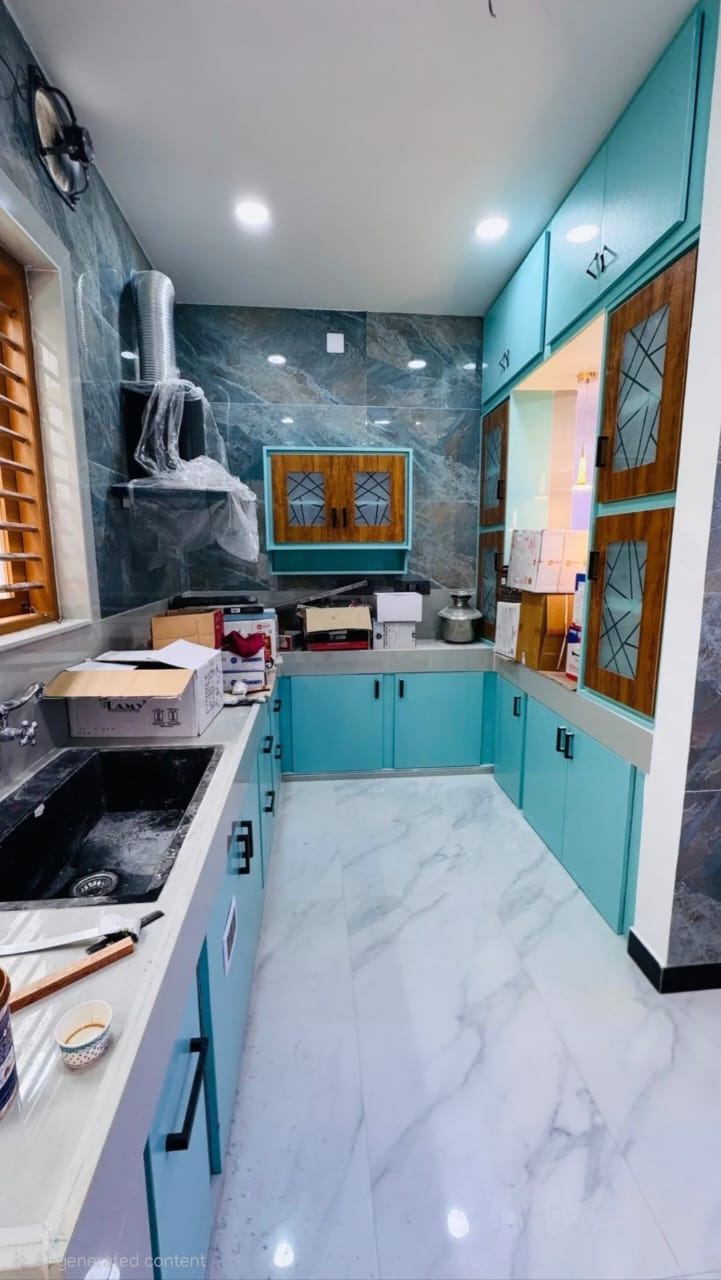
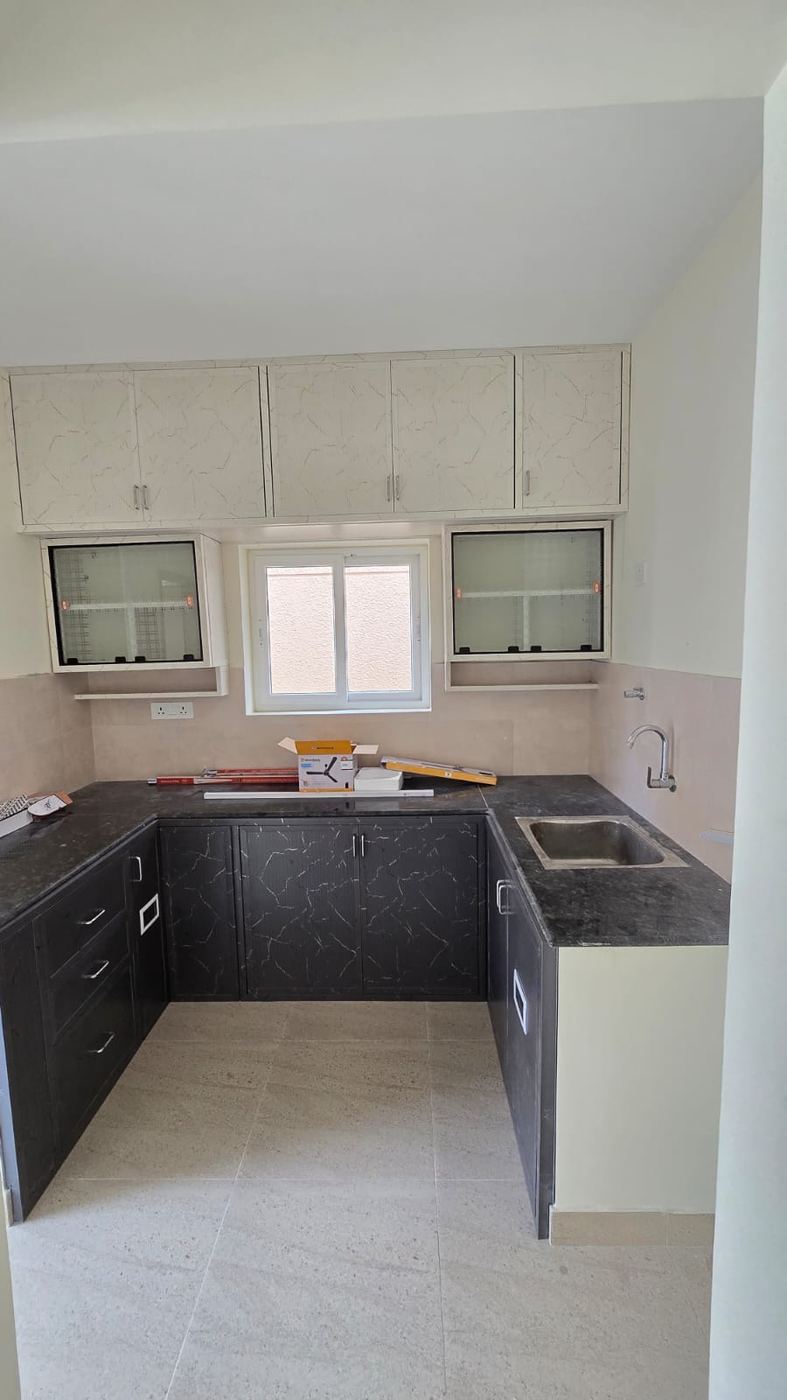
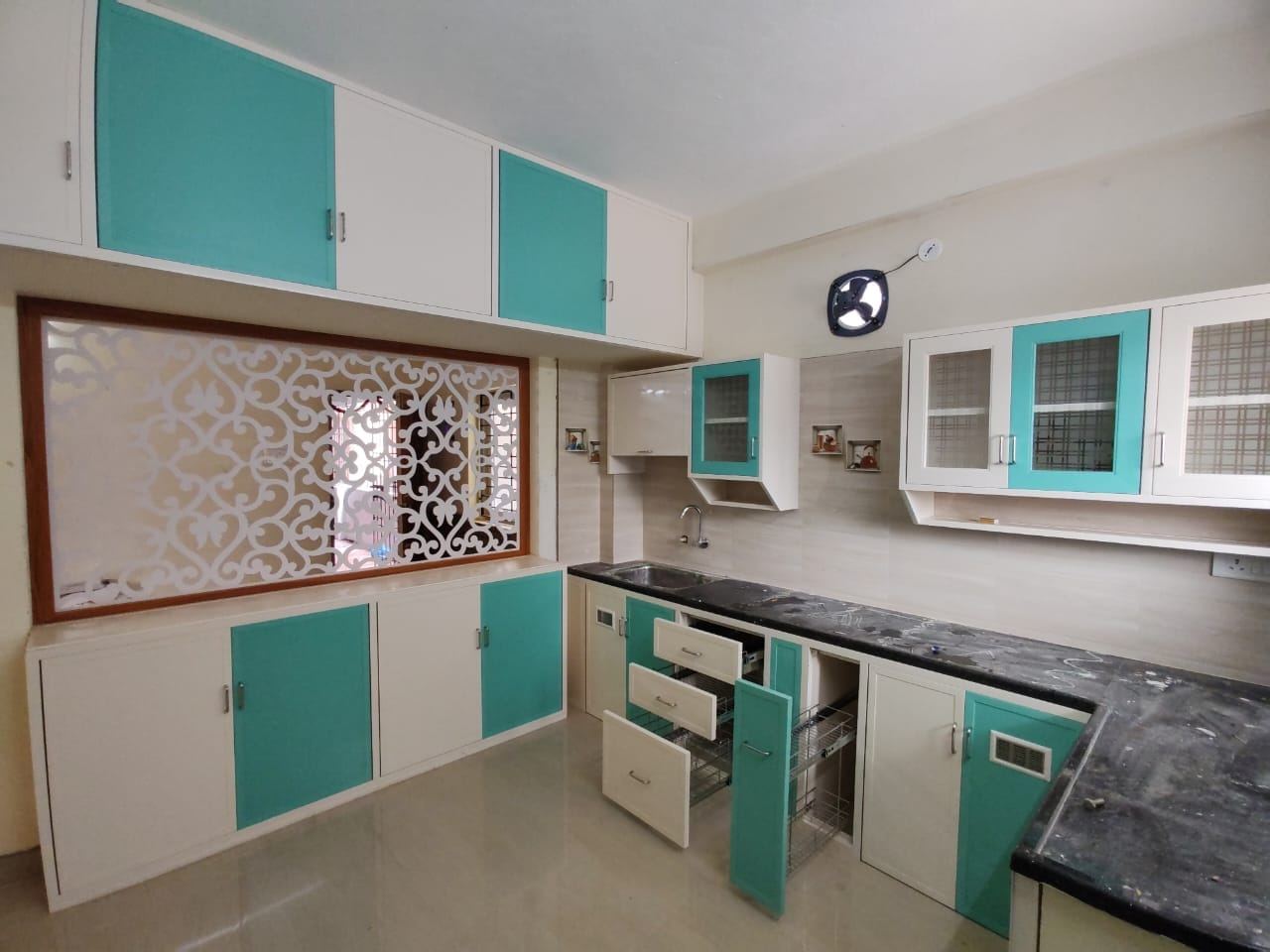
Understanding how a PVC/uPVC board is actually made helps explain why it behaves so differently from a wood-based one once it's in your home.
Key points
- PVC/uPVC resin is combined with foaming agents and additives, then extruded under heat and pressure into rigid foam sheets.
- The extrusion process creates a closed-cell structure, which is what prevents water absorption into the board.
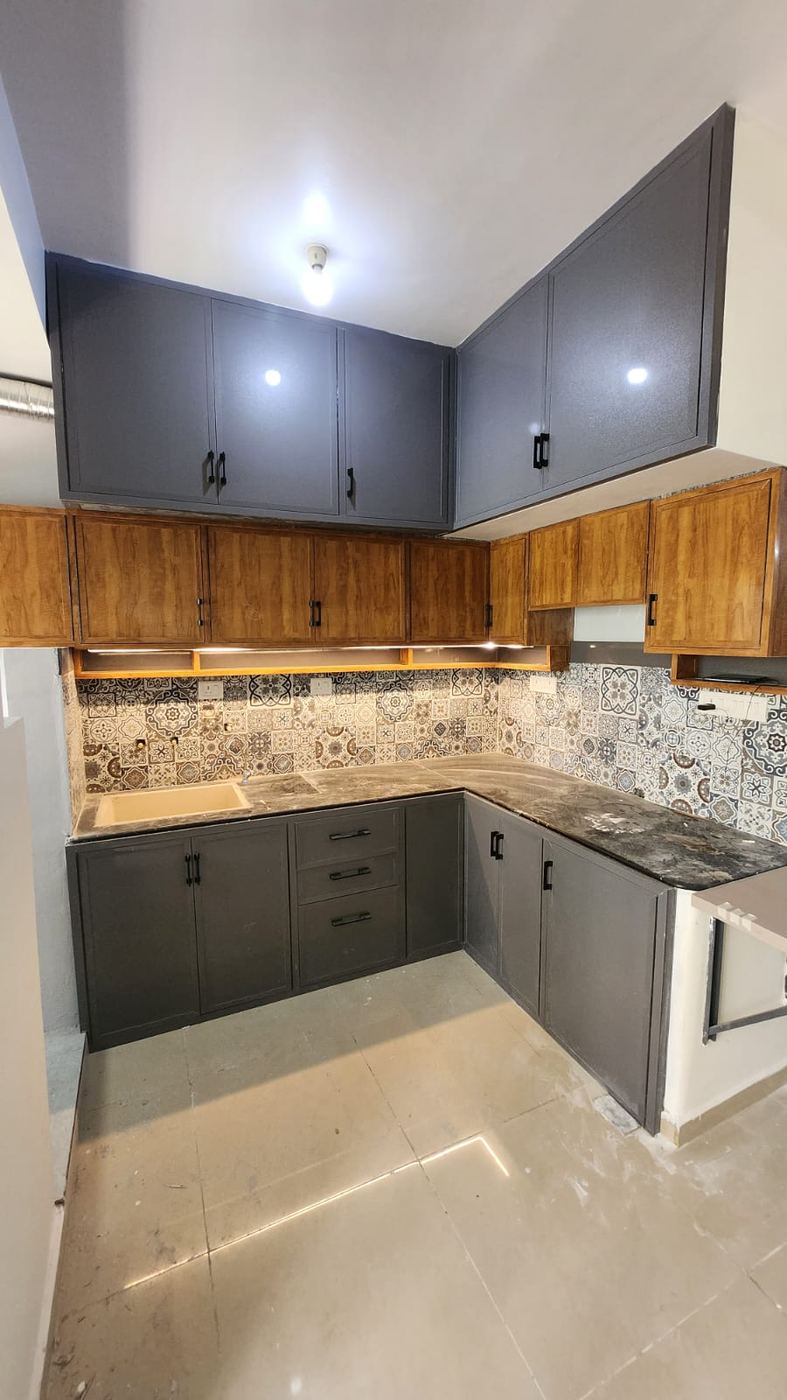
- Boards are then cut, edge-banded and finished with laminate, acrylic or PVC/uPVC film depending on the intended surface look.
- Because the manufacturing process is controlled and synthetic, board density and quality are far more consistent than natural wood, which varies with the tree it's cut from.
- This consistency is also why PVC/uPVC boards don't develop knots, grain irregularities or natural warping over time.
Why this matters when you're planning modular kitchen
At No More Wood, every modular kitchen we design starts from this same material logic — plywood kitchen shutters swell at the sink, laminate peels off at the hinge line, and termites quietly hollow out the carcass behind your cabinets — usually discovered only when a shelf collapses. We build the modular kitchen to avoid that from day one, not patch it later.
Need this done right, not just explained?
Talk to our modular kitchen designers — free site visit, no obligation.
PVC/uPVC Materials & Technology
No More Wood
Chennai