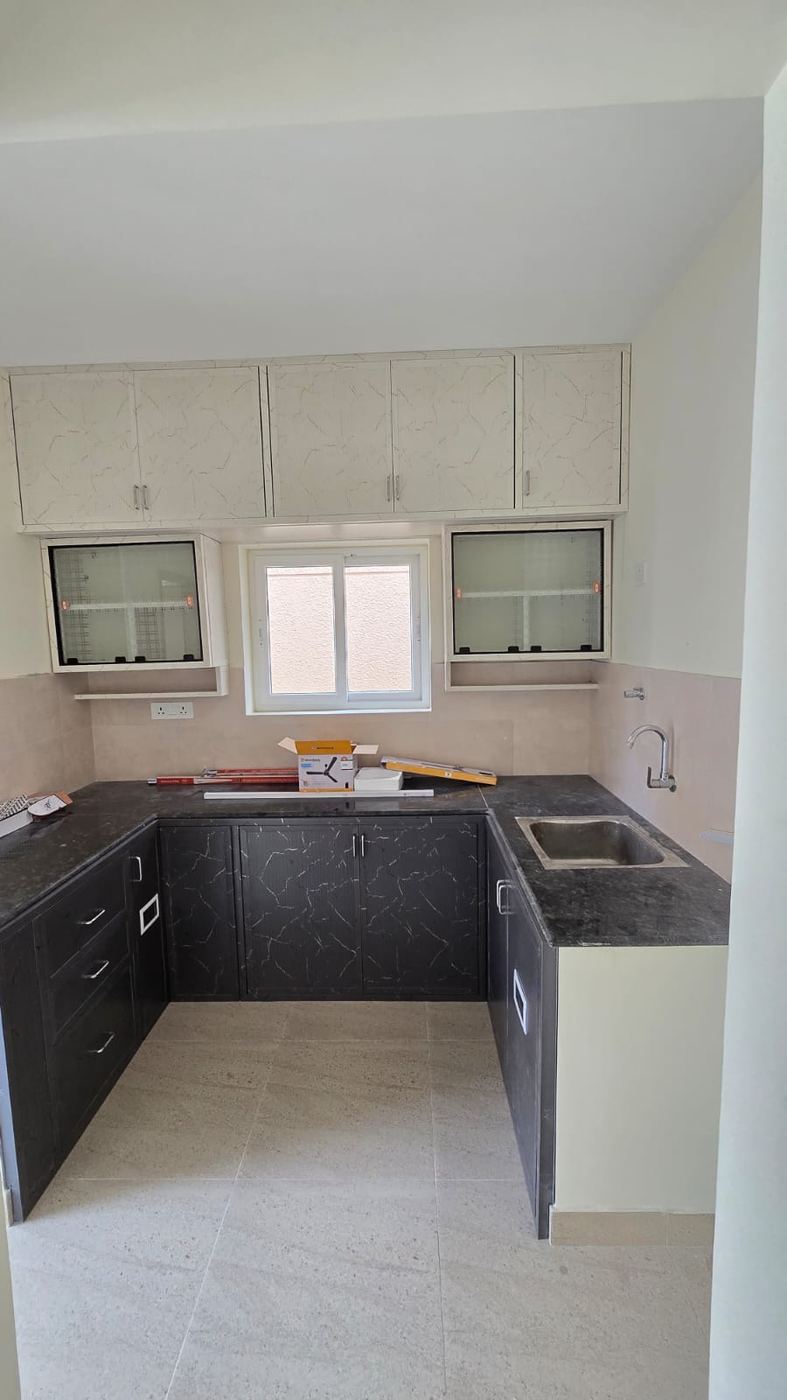
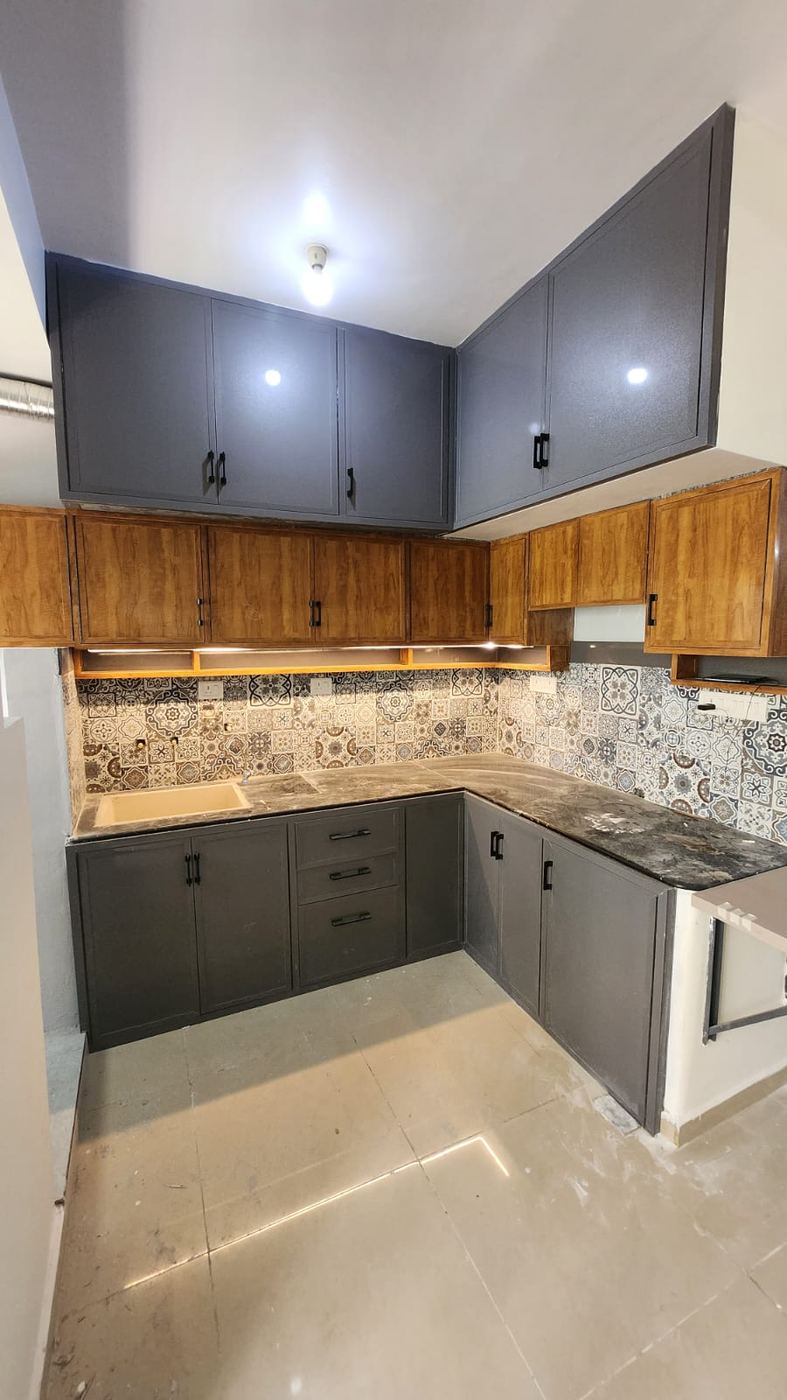
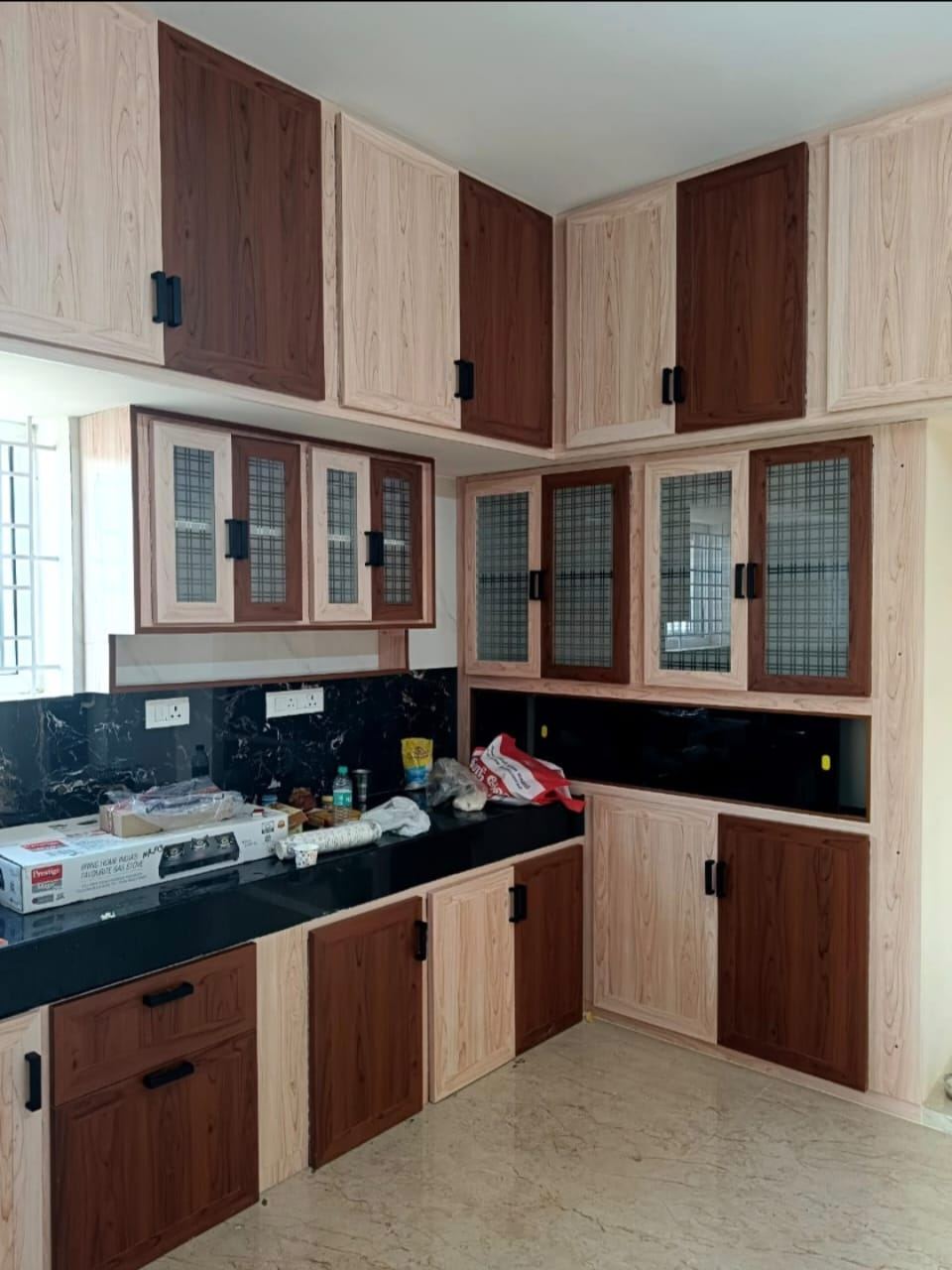
Chennai's humidity and coastal moisture put kitchen cabinets under more stress than most other cities, which is exactly where the material choice shows up first.
Key points
- Plywood is a wood-based board bonded with adhesive layers, so it can absorb moisture at cut edges and swell over years of humidity exposure.
- PVC/uPVC/WPC boards are a synthetic polymer composite that doesn't absorb water, so shutters and carcass panels hold their shape indefinitely.
- Termites feed on cellulose, present in plywood and MDF but absent in PVC/uPVC, removing the risk entirely rather than just treating it chemically.
- Plywood kitchens typically need periodic polishing or edge-sealing touch-ups; PVC/uPVC surfaces are wipe-clean and need none.
- Upfront cost is comparable at the mid-range tier; the difference shows up in maintenance cost and lifespan over 8–10 years.
Why this matters when you're planning modular kitchen
At No More Wood, every modular kitchen we design starts from this same material logic — plywood kitchen shutters swell at the sink, laminate peels off at the hinge line, and termites quietly hollow out the carcass behind your cabinets — usually discovered only when a shelf collapses. We build the modular kitchen to avoid that from day one, not patch it later.
Need this done right, not just explained?
Talk to our modular kitchen designers — free site visit, no obligation.
Modular Kitchen
No More Wood
Chennai