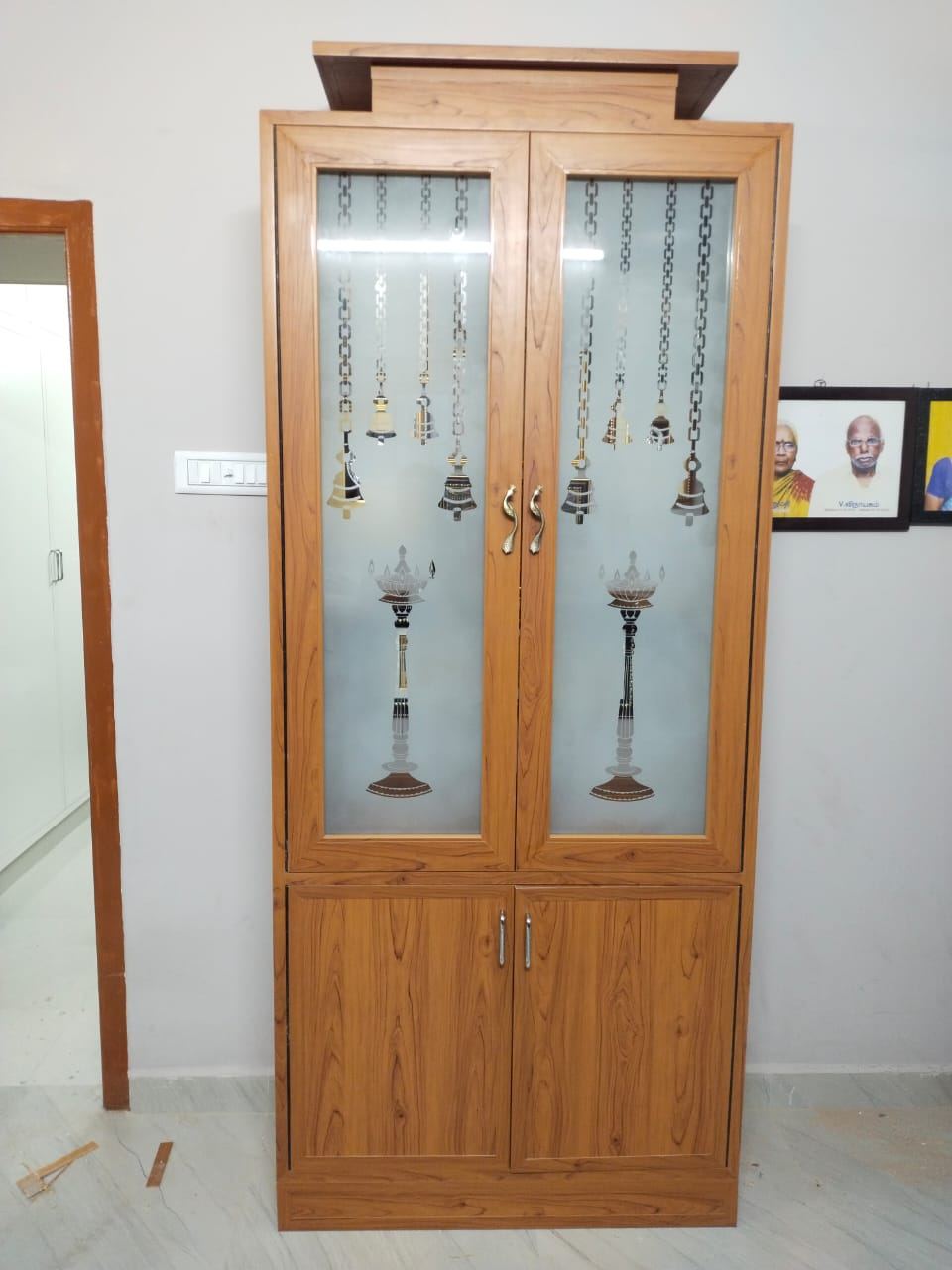
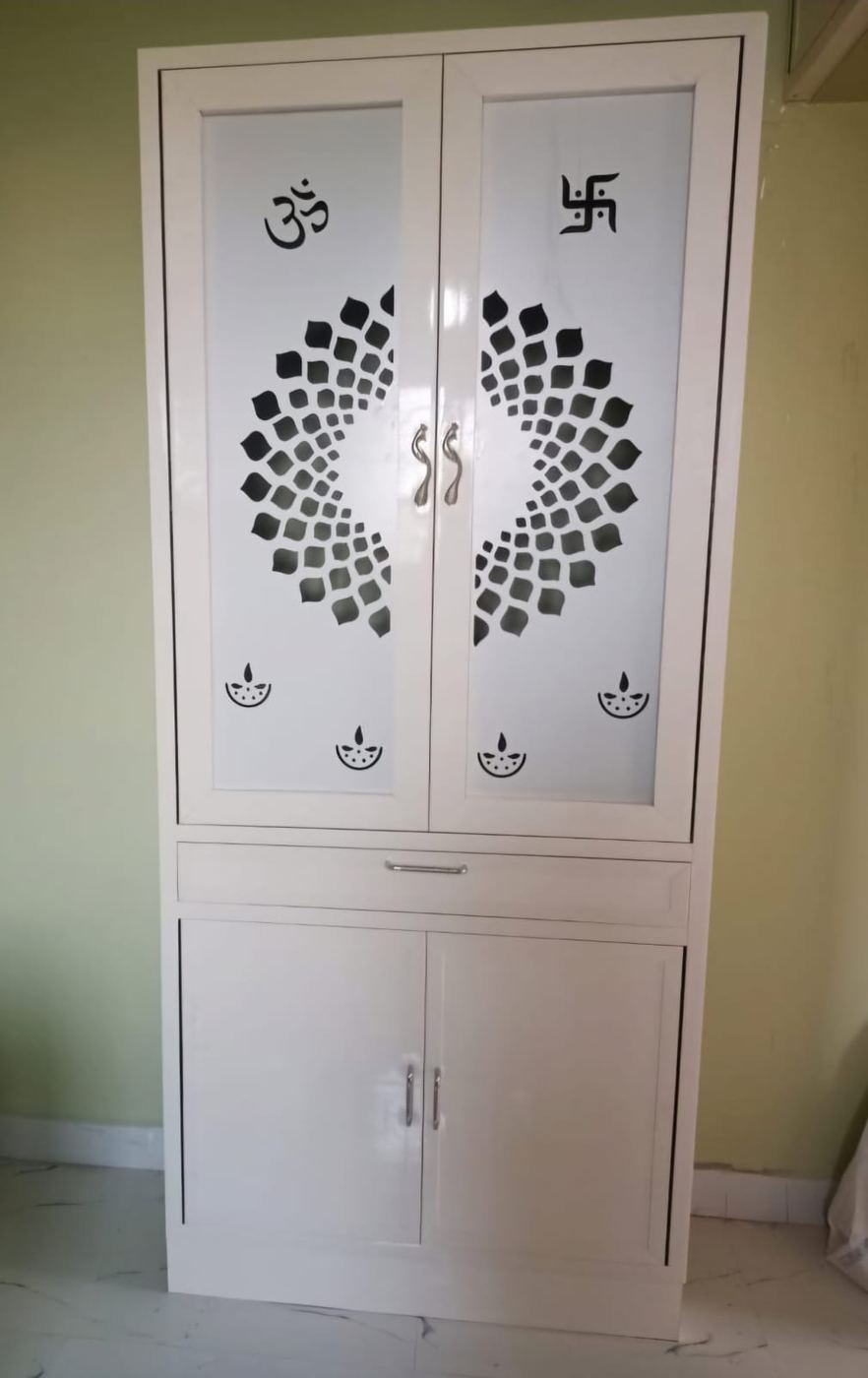
The right pooja unit format depends mostly on available floor space and how elaborate your daily rituals are.
Key points
- Wall-mounted units suit apartments and smaller homes, keeping the floor area free for other use.
- Floor-standing units offer more storage and can include seating space for longer rituals or gatherings.
- Wall-mounted units are generally quicker to install since there's no flooring or seating construction involved.
- Floor-standing units allow for larger idol displays and a more elaborate mandap-style design if desired.
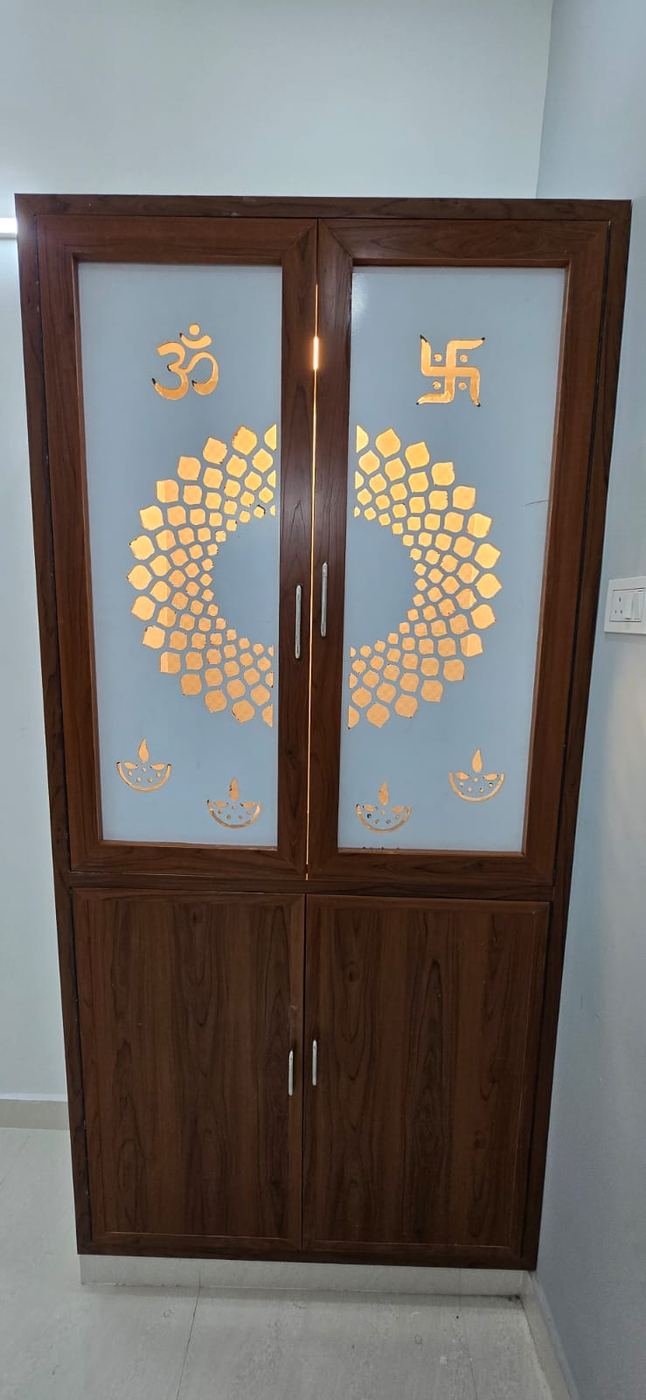
- Either format can be finished with the same carved-look PVC/uPVC detailing for a traditional appearance.
Why this matters when you're planning pooja unit
At No More Wood, every pooja unit we design starts from this same material logic — daily diyas, incense smoke and water offerings take a visible toll on a pooja unit faster than almost any other furniture in the house — wood darkens, laminate lifts at the edges, and soot builds up in corners. We build the pooja unit to avoid that from day one, not patch it later.
Need this done right, not just explained?
Talk to our pooja unit designers — free site visit, no obligation.
Vastu & Pooja Room
No More Wood
Chennai